
DEVELOPER: Rocksteady Studios
PUBLISHER: WB Games
REVIEWED ON: PlayStation 5 from a copy purchased by the author.
AUTHOR’S NOTE: During the development of this title, it was made public that Rocksteady Studios became a toxic and unsafe work environment for the women working within its studio. You can read more about the details HERE. The author for this piece matched the full retail price of the Deluxe Edition to the Girls Who Code nonprofit organization.
There were good, if not excellent, video games based on beloved comic book properties before the release of Batman: Arkham Asylum in 2009, but it can’t be understated how much credit Rocksteady Studios deserves for the era of superhero based games we find ourselves in. You don’t get to the likes of Marvel’s Spider-Man or Marvel’s Guardians of the Galaxy without Rocksteady proving that interactive superhero adventures could be more than mere tie-ins to major motion pictures.
Effortlessly blending stealth, a fluid, easy to learn combat system, exploration and story, the Arkham franchise broke ground not just for licensed games, but the industry as a whole. Though things like detective vision and a counter-based brawling system were popularized in the Assassin’s Creed franchise, the amount of imitators shot up exponentially once the Arkham series burst onto the scene.
It’s sad then that after a long wait of almost nine years between projects – 8 if you count the brief but still highly enjoyable Batman: Arkham VR – Rocksteady’s latest, Suicide Squad: Kill the Justice League, plays the role of imitator instead of innovator. Moving away from the focused single-player narratives they’ve become known for, Kill the Justice League sees Rocksteady branching out with a perpetually ongoing third-person multiplayer shooter in the already dying out live-service genre that has seen more causalities than success stories.
After a year of bad press – not including the already mentioned allegations that rocked the studio and the departure of Rocksteady’s founders – a mob mentality has developed that wants nothing more than to see Kill the Justice League fail. While it’s by no means the trainwreck that many expected with a solid foundation underneath its live-service bloat, its schizophrenic desire to have its single-player cake and eat its live-service microtransactions too would drive even Harvey Dent mad.
The alien Brainiac has descended upon Metropolis, throwing both the city and world into chaos. The majority of the Justice League: Batman, Superman, Wonder Woman, The Flash and Green Lantern have also become brainwashed servants under the would be conquerors control. Having lost its defenders, Amanda Waller, operating under the shadowy organization A.R.G.U.S, forcibly recruits 4 criminals into a group known as Task Force X and gives them one impossible mission: kill the Justice League.
Ever since they had their first game published in 2006, Rocksteady has become renowned in the video game industry for their storytelling prowess in the single player space. Though Kill the Justice League is a departure for the London based studio, much of its DNA can still be found and it’s what will keep you addicted to see the brief 10-12 hour campaign through to its conclusion.
While it doesn’t handle the misfits finding their family narrative as Marvel’s Guardians of the Galaxy, Kill the Justice League does an admirable job of turning cutthroat criminals into fully fleshed out characters that you’ll come to care about as they progress deeper within their mission. They’re still assassins, psychopaths, and scoundrels at the end of the day, but it still warms your heart to see the likes of Harley Quinn, Deadshot, King Shark and Deadshot come to open up to one another. King Shark in particular wants nothing more than to make friends and you’ll wish you could reach into the screen and give him a hug, just maybe not so close to his sharp teeth.
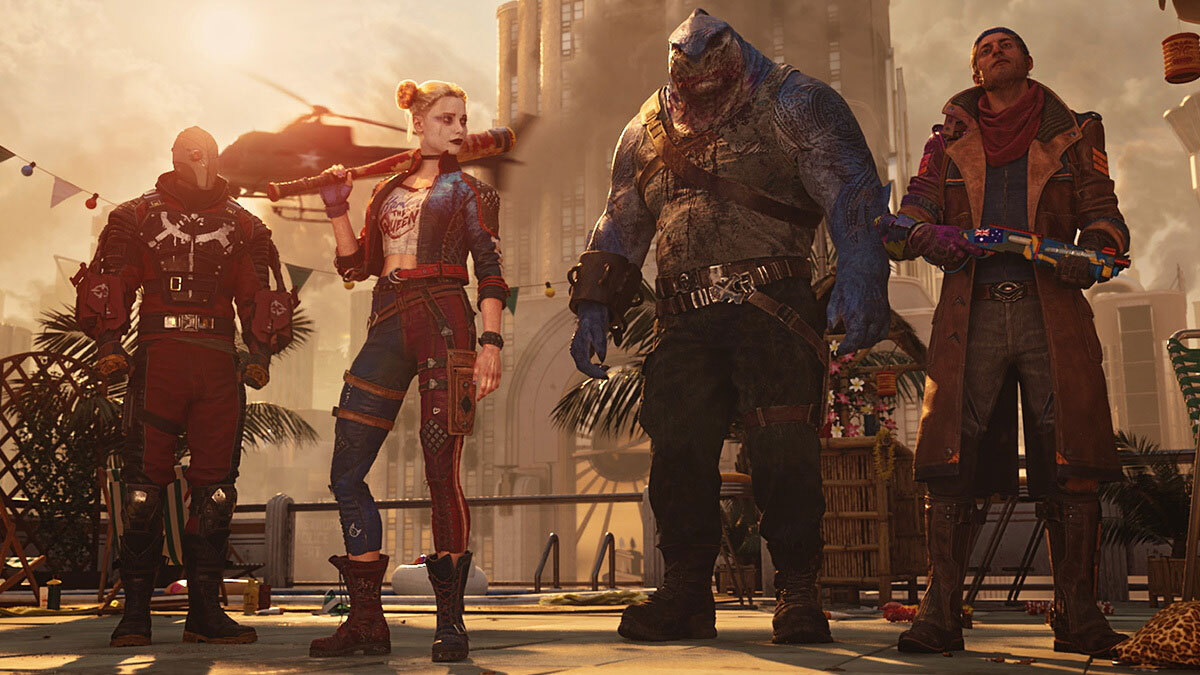
This feat is accomplished through some of the most impressive technology seen on a game of this scale and performances from some of the best in the business. Harley Quinn’s facial animations for example are so lifelike that she looks almost real, and when you have models like that married to the voices of Tara Strong, Nolan North, and the gone but never once forgotten Kevin Conroy – who turns in one of their final performances as Batman here – it’s hard not to be impressed.
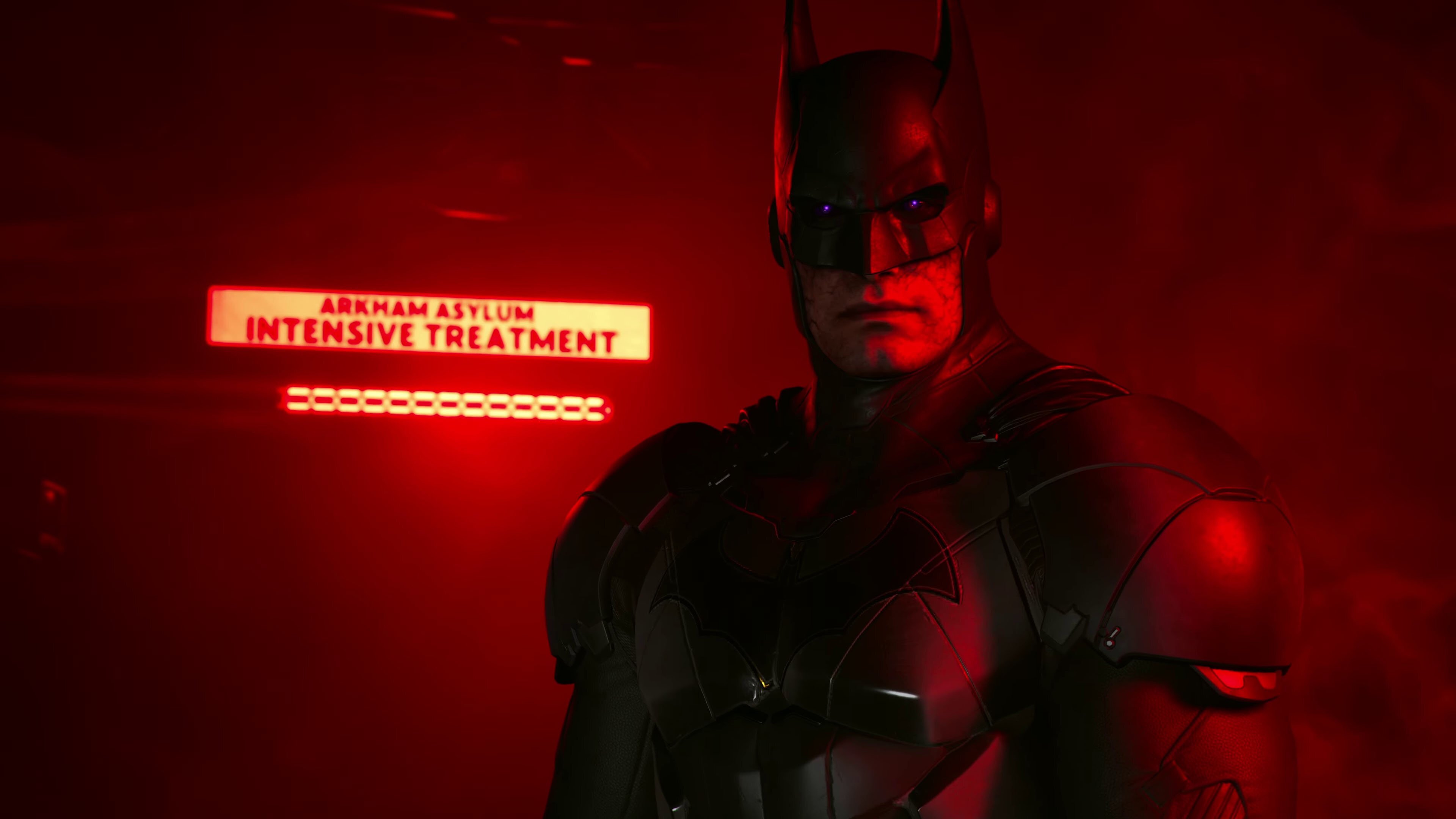
Given the premise, not to mention the title, lovers of DC’s pantheon of heroes may not agree with some of the choices made in Kill the Justice League. The story here is engaging, but it’s hard not to be tired of the superheroes turned evil trope, though Kevin Conroy seems to be reveling at the chance to play an evil version of Batman as he taunts your team over your communicator for hours. You do get to hear pre-possessed versions of the League via recordings, but the team you’re largely interacting with still feels like something out of Amazon’s take on The Boys.
In the Arkham series, Rocksteady split your focus between stealth, exploration and fisticuffs. Kill the Justice League is paired down in comparison as the focus is on kinetic, third-person shooting. If you can wrap your head around the fact that the entire Squad are all experts in firearms like Deadshot – think Bloodsport meeting Peacemaker in The Suicide Squad – you can begin to appreciate exactly what Rocksteady has built.
Kill the Justice League never expects you to cower behind cover, instead it pushes you to move as quickly as you can, dispatching foes while jumping, swinging, flying and teleporting about the battlefield. Upon starting the campaign, you’re given the opportunity to test out each soldier recruited into Task Force X, and everyone will quickly determine who they’ll want to stick through to the end. Deadshot for instance favors staying at a distance, setting up shots with his jetpack and a heavier bruiser like King Shark who carries a mini-gun is meant for close quarters, in your face skirmishes.
Making your anti-hero of choice dance about the battlefield does come with some adjustment as out of the gate, Kill the Justice League‘s controls are a lot to take in. If you try to main Harley Quinn for example, you effectively have to unlearn years spent swinging about Insomniac’s New York as Spider-Man. Keeping your momentum going requires staying airborne as long as possible but also knowing when to ground yourself to recharge. You’ll stumble at first, but after a few firefights you’ll begin to settle into a groove.
Guns feel great when fired with each giving the appropriate amount of kick and feedback both from your controller and the incredible sound design. Rocksteady turned Batman’s hand-to-hand combat into a sort of dance in the Arkham franchise, and it’s easy to get into a similar rhythm here as you shoot, dash, and recharge your shields akin to the 2 most recent DOOM titles by dispatching Brainaic’s fodder by weakening them with shots to the legs. Rocksteady even managed to sneak the Arkham counter mechanic in by firing with a separate trigger when the patented blue aura makes an appearance.
In the opening hours, Kill the Justice League offers a decent amount of variety in its missions albeit through the use of shooter tropes like capturing points, targeting the weak points on giant weapons who, strangely enough are shooting at a non-existent opposing force, and briefly piloting vehicles with a short expiration date that need to be frequently swapped out. The issue plaguing the overall experience, however, is that this is all their really is. Once you’ve destroyed one purple gun, you’re not exactly thrilled to keep doing it over and over, and the same goes for capturing civilians in, no joke, Poké Balls, and escorting them to an escape point.
Missions fatigue gets even worse with attempts to spice things up, such as parameters like only being able to kill with grenades or the dreaded critical hits only condition which is a nightmare until deep in the game. These only serve to stretch mundane tasks to their breaking point and rob you of the moment-to-moment action loop that hooked you to begin with. There are points where you get experience boosts by picking one member of Task Force X over another, but there’s no story specific quests related to each of them. This is something even Gotham Knights understood as there were reasons to bounce between the members of the Bat Family. Once you pick your main here, you’re going to stay with them and only dive deeper into their motivations via audio recordings found in the pause menu.
The story does take you inside from time to time, like paying a visit to a museum that recaps the Arkham series and the offices of the Daily Planet. These stops are few and far between though, and the beats that make up the campaign largely have you undertaking missions that feel more like errands. In that regard, they come across more like tutorials for the live-service aspect of Kill the Justice League and less like carefully plotted out sequences that Rocksteady have become known for. it feels nearly identical to the structure of Marvel’s Avengers that largely did the same thing, though that game’s campaign easily had more memorable moments than what’s found here.
Despite crafting memorable boss fights like the duel with Mr. Freeze in Batman: Arkham City, Rocksteady has never exactly excelled at these encounters and Kill the Justice League might be some of the least interesting they’ve ever constructed. Your team is either in a circular or semi-circular arena attempting to hit a small target that’s hard to see or one that’s impossible to miss. Both are bullet sponges that drag out too long, and in the case of your first League member battle, it’s unclear exactly what you have to do to the point of needless frustration. Given the gravity of these battles, they should get your heart racing but your hands will feel less white knuckled and more cramped from holding down the trigger for far too long.
Like Marvel’s Avengers, the carrot at the end of the stick here that’s meant to keep you back is the never ending hunt for loot. A game like this is made or broke by how much the player wants to engage with its systems and Kill the Justice League crumbles near immediately. You have guns sold to you by the Penguin and manufactured by LexCorp, but you’re given so many for accomplishing so little that the rewards hardly ever seem worth it. You’ll be tossing more firearms away than what you’ll be keeping while still keeping the purple, yellow and red aliens at bay with little resistance.
Eventually characters like Poison Ivy will add elemental buffs to your weapons and grenades, and Toyman will offer upgrades, but like so many AAA games that are too numerous to count, you’re collecting junk that’s supposed to have value just to see numbers go up slightly. This also applies to the upgrades to your characters as they level up by gaining experience in battle. Gone are the days when you’ll feel elated because you unlocked a perk you desperately needed, replaced instead with making a choice of whether you want 30% recharge rate of one thing over 22.3% in another.
With their recreations of the dreaded Arkham Asylum, a walled off slum prison and the entirety of Gotham City, Rocksteady are no slouches when it comes to map design. Metropolis, like Gotham before it, is packed to the brim with personality, and although it’s a perpetual warzone, zipping around a city not drenched in rain and darkness is a wonderful change of pace. When you have a moment to breath, there’s plenty of Easter Eggs to uncover for those with boxes full of DC comics, ranging from characters that hopefully will get added down the road to big name heroes.
You can only fast travel back to one point, and even then you have to unlock that luxury, but you can clear so much distance in a short amount of time that it rarely becomes a chore to get around. Still, you’ll wish there was more to do than just engage with the same fodder ad nauseam. There’s not even any treasure chests to find out in the wild. The Riddler is shoehorned into the experience once again, but all he’ll ever have you doing is running through rings like countless LEGO games published by Warner Bros., scanning answers for riddles and picking up scattered trophies just like before. At least King Shark is excited to do it.
When you deal with the dud of a final boss and enter Kill the Justice League‘s endgame, which as of this writing is just more of the same with a few different parameters, you’ll feel like you’re trapped on a treadmill until the next batch of seasonal content arrives. Given what you’ve accomplished, whether on your own or with a squad, you should feel like you’ve done the impossible but all you’ve really done is reach an advertisement to keep the grind going. It ultimately feels like such a hollow victory with a beyond frustrating non-ending.
Underneath the poorly thought out loot and repetitive mission types that plague Suicide Squad: Kill the Justice League lies an addictive, fast-paced third-person shooter that wishes to satisfy 2 disparate audiences but ends up pleasing neither. Those who are looking for the evolution of Rocksteady’s style will get annoyed by the forced live-service elements being thrown in their faces, and anyone looking for a co-op shooter with loot fix already have enough options to keep them chasing the purple dragon for years. Software like Suicide Squad: Kill the Justice League are made or broken by how much of an audience they can keep running on the hamster wheel, but as Marvel’s Avengers has already proven, simply having a big license isn’t enough no matter how strong your fundamentals are.
Suicide Squad: Kill the Justice League is available now on the PlayStation 5, Xbox Series S/X and PC.


 Comic Book Video Games
You actually gave this a good review tf is wrong with you?
LikeLike