There are too many years to count that have been hailed as “the best year ever” for video games. One that comes to mind in recent memory – if you count 18 years ago recent – is 2007. That fall saw the release of brand new franchises like Uncharted: Drake’s Fortune, Assassin’s Creed and Mass Effect. There were many exceptional offerings that year of course, like Super Mario Galaxy, but those three in particular were ones that I wanted to zero in on, because they each represented the start of fresh series and concepts that were terrific proofs of concept for better sequels. Sequels, it should be added, that were turned around in around 2 years – Mass Effect 2 landed in the early months of 2010 being the sole outlier.
Assassin’s Creed in particular is one that I think on a lot of this trio. What started off as a spin-off of sorts from Prince of Persia has turned into about one of the only properties that Ubisoft invests money into nowadays. It’s origins, however, were pretty bare bones compared to the giant open worlds stuffed to the brim with side-quests and distractions the series is known for now. Sure, you had big maps to explore, buildings and rooftops in which to hone your parkour skills and assassination contracts to pull off in the original, but that was really it. In the January 2008 issue of EGM, Michael Donahue elaborated on this in his 7.0/10 review for Assassin’s Creed. He would write “See, Creed wasn’t built with a beginning, middle, and an end. No, it was built with a beginning, a middle, and an advertisement…for its inevitable sequel.” The rest of the Review Crew awarded it at 6.0/10 and 4.5/10 and thus were equally unimpressed.

I was one of those people who saw the potential of Ubisoft’s Assassin’s Creed but didn’t love playing it. It’s one of those games where you think, “if they just add this, this, and this, it would be incredible” and that game was Assassin’s Creed II, a game I got as a gift for the holidays in 2009 and couldn’t put down. It made we want to learn Italian, travel, and when I wasn’t playing it, I was out in the world lightly brushing away crowds in the mall or looking for handholds in tall buildings to start my imaginary ascent.
Video games of the AAA variety, those that tend to still be sold at places like GameStop and Walmart, not only cost a lot of money to produce, they also take longer to build in 2025 and its been this way for a few years now. There are many players – I don’t count myself among them – who want titles that stretch out for 100 hours and pass the Digital Foundry stable frame rate test. Titles that don’t fall in at least one of those camps tend to get quickly discounted, enjoyed at a lower price and then are deemed “failures” by publishers as folks on social media say how crazy that is because they enjoyed their time with a certain underperforming game and are perplexed about a lack of sales performance. The caveat mostly being that they bought it on a Black Friday deal or Steam sale.
Over the past few years, there have been fresh examples of the above mentioned 2007 trinity that have just so happened to be in the comic book video games space that could use that concept proving sequel. 2021 saw the release of Marvel’s Guardians of the Galaxy from developer Eidos-Montréal, which, in my opinion, out Naughty Dog’s Naughty Dog. It’s a single-player, narrative focused action game that doesn’t overstay its welcome with amazing performances and punchy shooting mechanics that incorporates teamwork into combat in a way that aligns with the story. Sadly, Marvel’s Guardians of the Galaxy failed to meet publisher Square-Enix’s lofty sales expectations and the studio behind it was divested from their portfolio. They found a new home at the Embracer Group where jobs and studios go to die. Thankfully Eidos-Montréal hasn’t been among the causalities, however they did lose close to 100 employees early last year due to Embracer related restructuring.
Not a year later, Gotham Knights, developed by WB Games Montréal – must be something with that city I suppose – suffered a similar fate. While it didn’t reach the critical acclaim of Marvel’s Guardians of the Galaxy, it did manage to find some measure of success based on certain metrics. In its release month, it ranked 2nd on the NPD charts, remained in the top 10 for November and the top 20 for December. Those aren’t Arkham numbers, but they still, from an outsiders perspective at least, show that there was some consumer interest.
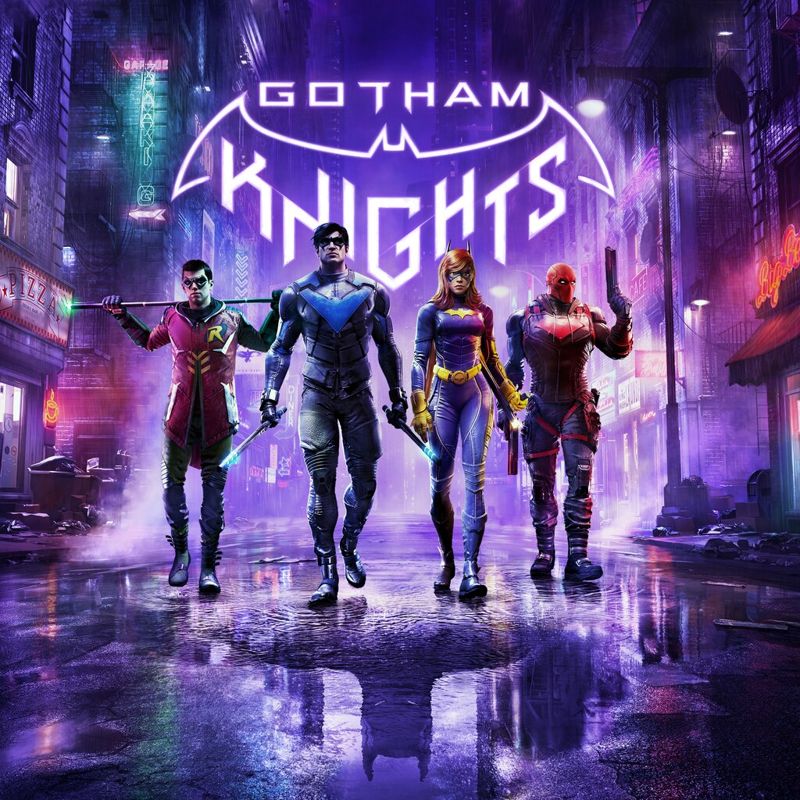
In a different world, perhaps, we would be commenting on sequels for both of those Canadian developed superhero games, but that’s not the section of the multiverse we’re in. That hasn’t been for a lack of trying on the part of WB Games Montréal to make it happen here though. In Jason Schreier’s expose for Bloomberg on the state of WB Games for the past 10 years or so under outgoing executive David Haddad, the team behind Gotham Knights pitched some sort of follow-up but were turned down. Now WB Games Montréal is mainly providing support for other projects, and Eidos-Montréal meanwhile hasn’t announced formally what they’re working on next.
Size, scope, budget, and unattainable sales expectations are some of the root causes for untimely sequels. Insomniac Games’ latest Spider-Man games have been one of the few outliers with 3 games published in 4 years counting the Miles Morales detour. God of War (2018), a reboot of the series that started on the PS2, dropped in early 2018 and was followed up in late 2022 with God of War: Ragnarok. That project only fell behind schedule to allow Christopher Judge, who plays Kratos, to recuperate after he suffered issues with his back, knees and hips. Sticking in the PlayStation camp, Horizon: Zero Dawn arrived in 2017 but never got a sequel until early 2022 with Horizon: Forbidden West.
The elephant in the room is the COVID-19 pandemic that went global in early 2020 and stifled the production of every entertainment industry on the planet. In the case of Horizon, which Sony is keen to push with a VR title, not to mention a LEGO game and a remaster of a 7-year old game in 2024 alone, 5 years is a long time between chapters. There are so many games, shows, movies and media to consume that so much gets lost in the shuffle. When I booted up Forbidden West in early 2022, I couldn’t remember much about the first game other than there were robot dinosaurs and the main character being named Aloy. YouTube recaps help, but they’re not the same, and clocking in at well over 50-hours, Horizon: Zero Dawn is not an enterprise undertaken lightly.
Horizon as a series shouldn’t be singled out as God of War and Marvel’s Spider-Man both clock in at around 20-30 hours, so not exactly casual run throughs if you’re busy or happen to have other hobbies. In the pre-soft reboot era, a God of War game lasted anywhere between 8-12 hours. If you wanted to replay the 2005 original leading up to the 2007 sequel, all you need was a somewhat casual weekend. Publishers want players stuck in a game for a long time, and hopefully to sell you trinkets along the way, but these massive projects are doing little to build franchises, whether they’re based on established licenses or not.
Then there’s economic factors that are maybe too complex to get into on a website that talks about comic book video games. Bigger games mean larger budgets and price tags that are simply pricing out the average consumer who are struggling just to live. Personally speaking, my disposable income for video games has dropped exponentially over the past few years so I rarely try new releases big or small and stick to things that I can talk about here. Will I buy DOOM: The Dark Ages close to my birthday in May? We’ll see, but doubtful. I’m day one on the brawler inspired by The Phantom dropping on the 12th of this month though.
Speaking of DOOM, yes, there’s Game Pass, but it’s not a service that I care to interact with. Xbox started a campaign late last year telling you all the things that were an Xbox, from the consoles both from Microsoft and other partners to phones. What they should edit into the campaign is that Xbox has effectively turned into a modern Blockbuster rental service. I would love to see the data matching sales of Indiana Jones and the Great Circle compared to the times it was “rented” from Game Pass. I barely got out of business school, so I don’t understand the math of how X many million players helps to recoup the budget of an expensive game where an external licensor gets a cut. There’s a whole other conversation to be spawned from this about what consumers do and don’t own in our all digital world.

Developing video games is a complicated endeavor and even the most talented teams can’t bring a vision to life in the way they truly want on the first pass. Dating back as far as the NES and arcade, sequels like Mega Man 2 and Street Fighter II became sagas that have been beloved for decades despite their first entries stumbling out the gate. Short sighted investors wanting to get the true revenue from the industry always seem to miss that it’s always a marathon and rarely ever a sprint. Too many excellent pieces of software that could spawn multiple entries that in turn could evolve into mass media properties aren’t getting the chance because they’re cut down before they could grow. The industry needs to work back to the time when sequels could truly show the merits of a team and the work they produce.


 Comic Book Video Games