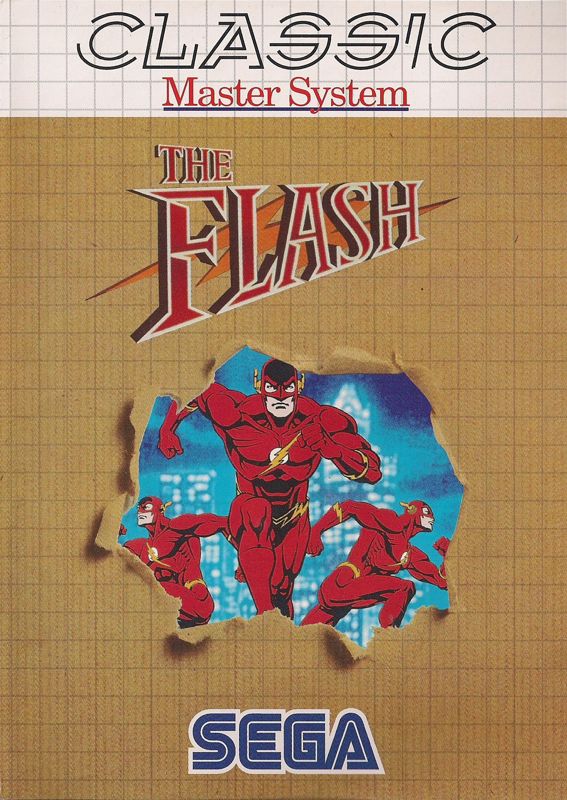
DEVELOPER: Probe Entertainment Ltd.
PUBLISHER: Sega
REVIEWED ON: Retron 5 with a Retron 3-in-1 adaptor and a Retro-Bit Sega Genesis 6-button controller.
The Flash is enjoying what might be considered his brightest time in the public spotlight. While the character in his many incarnations has been speeding through the pages of DC Comics for decades and is regularly a member of the Justice League, new audiences learned Flash facts from The Flash television series which just wrapped up its 9 season run on the CW. This summer audiences also will be able to catch the Scarlet Speedster’s first solo big-screen outing in The Flash, which is not to be confused with the 2 live-action series also titled The Flash.
Players can harness the incredible speed of The Flash in ensemble outings like Justice League Heroes, countless LEGO games and duo of Injustice fighting games among others, however his own solo titles are limited to just three with two of those being relegated to dedicated Nintendo handhelds. The first, and to date only, console game starring the superhero wasn’t even released in North America and only came to market in European and Brazilian markets on the Sega Master System. Like The Flash on Game Boy, it was also inspired by the short lived television series from the early 90s.

When playing a piece of software like The Flash on Sega Master System, you come into it hoping to discover a hidden gem that you can then share with a global audience who were perhaps previously unaware of its existence. Despite being an impressive programming feat in just how quickly The Flash moves about the screen though, The Flash on Sega Master System is held back by countless early video game frustrations including an unfair time limit, a lack of continues, confusing level design and cheap unavoidable deaths.
The Trickster, played in the show by Mark Hamill, with the help of the computer savvy Trachmann has declared himself mayor and taken control of Central City. Using his new found political sway, he has also declared The Flash a criminal and raided the jewels housed within the cities treasury. With the aid of his ally Tina McGee at S.T.A.R Labs, it’s up to The Flash to clear his name and put an end to Trickster’s plan.

Like many games from the 8 and 16-bit era, The Flash is lite on plot with the included manual doing most of the heavy lifting for linking its 6 stages together. About all that’s included in the cartridge is a splash screen between episodes featuring Tina telling Flash where they have to go next. It’s not a deal breaker exactly as many video games from this time, licensed or otherwise, kept their premises simple.
Releasing in 1993 and on a Sega console no less, The Flash seemingly takes inspiration from another character declaring themselves the fastest thing alive: Sonic the Hedgehog. Like the blue blur, The Flash dashes spectacularly about the screen without a hint of slow down, and it honestly makes you realize just how under appreciated the Sega Master System hardware truly was. Much like Sega’s mascot, the levels that make up The Flash, including the streets of Central City, the Trickster’s Funhouse and a roller coaster themed stage are filled with alternate routes, secrets, and require more from the player from just getting Flash from one end of a world to another.
Whereas Sonic’s zones were populated with loop-de-loops and other straightaways to enjoy his speed, The Flash‘s levels are a confusing mess that sap the enjoyment out of having superspeed. Exits for every episode have to be discovered, and if you reach them without finding a switch that unlocks them first, you can’t progress. There’s an emphasis placed on exploration, but you also have a very small time limit that causes you to lose a life if it ticks down to zero.

Further using a Sonic comparison, The Flash also has power-ups that will do things like extend your time, award you with extra chances and bonus health by breaking open blocks. Sonic featured destroyable objects that sometimes would hurt rather than harm you, but for the most part, the player knew what they were getting because it was displayed on a screen. Boxes in The Flash on the other hand are a roll of the dice every time you crack one open, and when precious time bonuses, 1-UPs and even continues are found within them, it becomes incredibly frustrating to mostly be met by exploding mines and spikes or just extra points. When bundled with The Flash’s tendency to bump into unexpected enemies or other hazards due to their speed, completing even the first trio of stages boils down to rote memorization or studying longplays on YouTube.
The environments here are colorful and varied and it’s easy enough to understand what can and cannot be interacted with for the most part. The player can’t appreciate any of that, however, when they have to keep moving under strict penalty of death. There’s no password system and you only earn spare continues when you find them, so once you burn through chances you have, it’s back to the starting title screen.
The Flash has three ways to combat enemies with one being limited to the one type of boss that’s recycled at the end of each episode. He can create mini-tornados with his hands when on the ground, which is useful for cracking open power-up blocks, or he can drop down on enemies whilst spinning around as a whirlwind from the air. There’s a meter that depletes when you tap into the Speed Force, but there’s plenty of stations to top it up so you never need to fear about running out. The biggest hurdle in The Flash mostly comes down from having to hit a button for your aerial spin attack because you’re brain is wired to years of muscle memory from Sonic the Hedgehog, or even Super Mario Bros., where simply landing on an enemy kills them.
After completing 2 regular action stages, each of the 6 episodes concludes in a fight with The Trickster that changes things up slightly, but it’s also the same battle every time just with more obstacles to avoid. In them, The Flash is automatically running and you have to hurl his emblem – or maybe lightning bolts? it’s a little unclear – at specific segments of Trickster’s car until they’re all gone. It’s enjoyable the first time you do it because the stress of time and navigation is taken away, but some variety would’ve also been appreciated too. Captain Cold did make an appearance on the series this is based on, but they’re nowhere to be found.

Up, right, down, left, down, right, up on the title screen. This cheat will allow you to skip levels in The Flash which works in lieu of passwords and its punishing continue screen. For anyone who decides to give this a try, it might be the only way to see beyond the second, or even first, episode depending on your patience for punishing difficulty. It’s impressive with just how fast the title character moves in this game without the system struggling to keep up. But, with so many barriers thrown up against you that sucks the enjoyment out of being, well, The Flash, it makes for a game that only the most dedicated fans of the character need to invest their time in seeking out.
If you’re in the market for a dedicated Flash game, Justice League Heroes: The Flash is still the one to beat.


 Comic Book Video Games